
Classic Jazz Album Covers by S. Neil Fujita
Back in 2000 I was studying Graphic Design at Camberwell College of Art and had just spent my student loan on a pair of Technics 1200’s, which me and my flatmate Ben carried home on the bus from Turnkey on Charing Cross Rd to our dingy Peckham flat. When the new term started I was £700 down and heavily invested in discovering more about music through this almost-obsolete format called vinyl. I’d recently started exploring the world of funk and jazz through Ben, who already had a sizable collection of records. I’d spend my weekends visiting record shops to dig about without a clue what any of it was.
Shyness got the better of me in those days and not being ballsy enough to ask questions or listen to anything in the shop would mean I’d have to take a punt on a record completely based on the cover. As it happened there were quite a lot of amazing jazz/funk covers to draw me in and as I started to understand and appreciate the sleeve design of labels like Blue Note & Verve records I realised there was a whole new world to discover in sleeve artwork alone. One of the sleeves that stood out for me was Take Five by Dave Brubeck, the colourful, abstract painting on the cover seemed to dance off the page and I thought to myself “well, even if this records is diabolical I can always just keep it for the cover”, and I’ve adopted that same mantra to this day, regularly discovering and buying up cheap records purely for the artwork. Thankfully, Time Out proved to be a classic record and my youthful ears took to it immediately, it would go on to become one of the first records that introduced me to jazz.
“A lot of these covers are recognisable by their playful, abstract paintings which appear like a visual musical score, dancing around the page, acting almost like a visual guide to the music inside.”
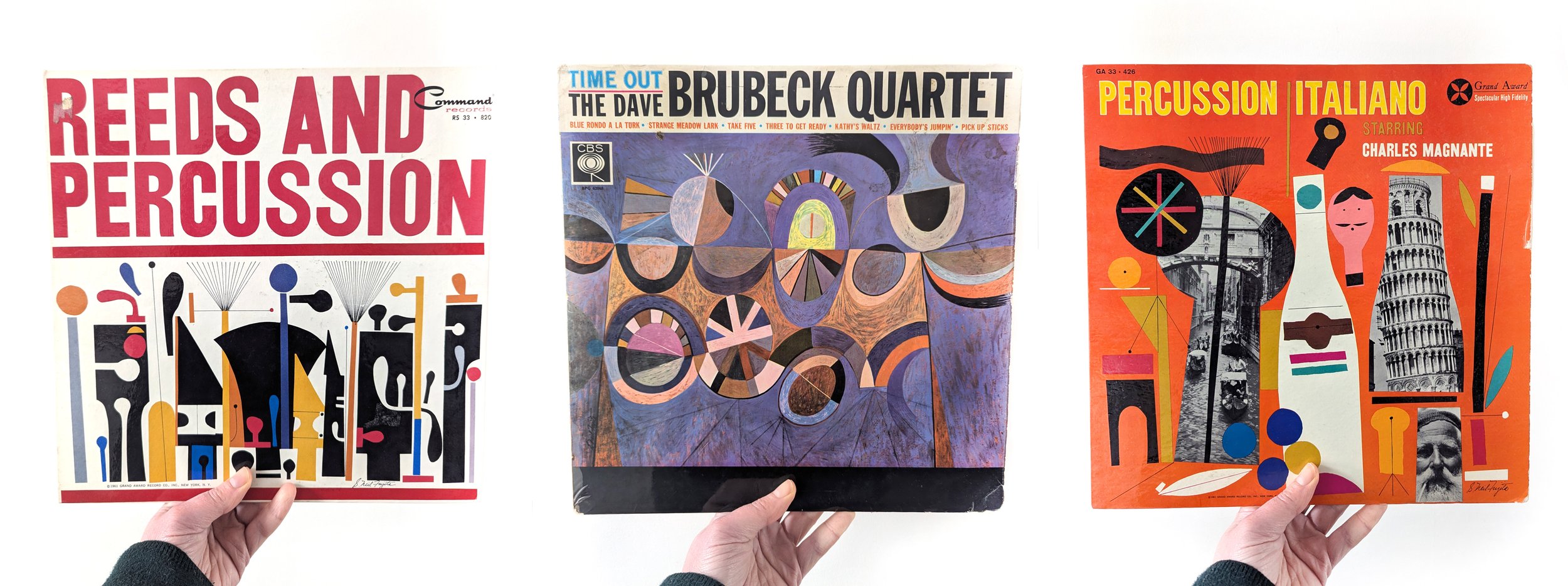
Record Cover Designs by S. Neil Fujita
Skip forward to 2025 and I'd just picked up another record that caught my eye on Discogs. Percussion Italiano feat. Charles Magnante has an adorable collage cover which reminded me of the mid-century style I’d seen before on posters and ceramics from the late 50’s/early 60s’. The sleeve notes credited the artist as being someone called S. Neil Fujita, so I used that handy tool called Google to see if I could find out a bit more about the person behind the artwork.
After some very basic digging (a Wiki page to be precise) I discovered that Neil Fujita was a Japanese/American artist who was responsible for the Dave Brubeck cover which caught my attention all those years ago. He worked as a Graphic Designer for Columbia Records from 1954-57 and, at the time, felt a pressure to compete with Blue Note cover artwork. He was responsible for some truly iconic jazz record covers including Mingus Ah Um by Charles Mingus, Modern Jazz Perspective Gigi Gryce, Round About Midnight by Miles Davis AND he even designed a few Command Record covers that I had stashed away in a corner. A lot of these covers are recognisable by their playful, abstract paintings which appear like a visual musical score, dancing around the page, acting almost like a visual guide to the music inside.
There isn’t a huge amount of information online about Sadamitsu Neil Fujita, but enough to get an idea of the impact his designs had on the music industry. Here is a short YouTube Video Neil Fujita: The Man Behind the Look and Feel of Jazz which explain a it about how revolutionary his work was in bringing the idea of art and “abstraction” to album sleeves. There is a whole debate to be had about the idea of sounds and images corresponding, but it’s clear Neil envisaged some kind of relationship between the two and, in doing so, created album covers that seem to match perfectly with the sound within the sleeves.